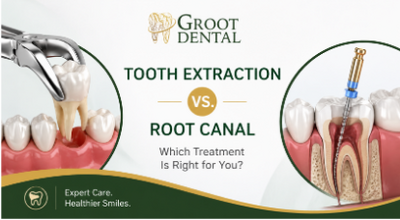
When you have severe tooth pain or a damaged tooth, one of the biggest questions is whether the tooth can be saved or needs to be removed. If you are searching for tooth extractions in Oshawa, the experienced team at Groot Dental can help you understand the difference between a tooth extraction and a root canal so you can make an informed decision. Both treatments address dental problems, but they serve different purposes. After a thorough examination, your dentist will recommend the option that best protects your oral health while keeping you comfortable.
A tooth extraction is the removal of a tooth that cannot be restored or is causing problems for your overall oral health. Dentists always aim to preserve natural teeth whenever possible, but there are situations where extraction becomes the safest and most effective solution.
Common reasons for tooth extractions include:
If you are looking for tooth extractions, an experienced dentist will first evaluate whether the tooth can be saved before recommending removal.
A root canal is a procedure designed to save a natural tooth when the inner pulp becomes infected or inflamed. During treatment, the infected tissue is removed, the inside of the tooth is cleaned and disinfected, and the tooth is sealed to prevent future infection.
A root canal is often recommended when:
Saving your natural tooth whenever possible helps maintain normal chewing, speech, and jawbone health.
Although both procedures treat serious dental issues, they have different goals.
A root canal focuses on preserving your natural tooth by eliminating infection. The tooth remains in place and is often protected with a dental crown for long-term strength.
A tooth extraction removes the affected tooth entirely when it is no longer possible to restore it. After healing, your dentist may recommend replacing the missing tooth with a dental implant, bridge, or denture to restore function and appearance.
Your dentist will carefully assess your condition before deciding which treatment offers the best long-term outcome.
A root canal is generally preferred when the tooth structure remains healthy enough to support restoration. Keeping your natural tooth offers several benefits, including maintaining proper bite alignment and preventing nearby teeth from shifting.
A root canal may be the right choice if:
Modern root canal procedures are performed with advanced techniques that make treatment much more comfortable than many people expect.
Sometimes saving a tooth is no longer possible. In these situations, removing the tooth can eliminate pain, prevent the spread of infection, and protect surrounding teeth.
Your dentist may recommend tooth extractions when:
Once healing is complete, replacing the missing tooth can help restore your smile and prevent future complications.
Recovery differs depending on the procedure.
After a root canal, many patients return to normal activities the following day. Mild soreness usually improves within a few days.
Following a tooth extraction, healing typically takes one to two weeks. Your dentist will provide detailed aftercare instructions, including eating soft foods, avoiding smoking, and keeping the extraction site clean to reduce the risk of complications such as dry socket.
Following these instructions carefully helps support a smooth recovery.
Every patient is different, so there is no one-size-fits-all answer. Your dentist will evaluate several factors before recommending treatment, including:
Early dental care often increases the chances of saving a tooth before extraction becomes necessary.
Choosing the right dental clinic can make your treatment experience more comfortable and stress-free. At Groot Dental, we are committed to providing patient-focused care with modern technology and personalized treatment plans.
Patients choose us because we offer:
Whether your goal is saving a tooth or safely removing one, our team takes the time to explain every option so you can make a confident decision.
Is a root canal better than a tooth extraction?
Whenever possible, saving a natural tooth with a root canal is usually the preferred option. However, if the tooth cannot be restored, extraction may provide the healthiest long-term solution.
Is a tooth extraction painful?
Modern dental techniques and local anesthesia help ensure that tooth extractions are performed comfortably. Mild soreness after the procedure is normal and typically improves within a few days.
How long does recovery take after a tooth extraction?
Most patients recover within one to two weeks, although complete healing of the extraction site may take longer depending on the complexity of the procedure.
Can I replace a tooth after an extraction?
Yes. Missing teeth can often be replaced with dental implants, bridges, or dentures to restore function and appearance.
How do I know if I need a root canal or an extraction?
Only a dental examination and X-rays can determine which treatment is appropriate. Your dentist will evaluate the condition of the tooth and recommend the option that offers the best long-term outcome.
Choosing between a root canal and an extraction depends on the health of your tooth and your overall oral condition. While preserving a natural tooth is often the preferred approach, there are situations where removal is the safest and most effective treatment. If you are looking for tooth extractions in Oshawa, the experienced team at Groot Dental is here to evaluate your smile and recommend the treatment that best supports your long-term oral health. Schedule a consultation today to receive personalized care and trusted dental solutions in Oshawa.